Before You Renovate: The DIY Home Projects Actually Worth Your Weekend
Thinking about investing in home renovations but aren't sure what upgrades will actually bring a return of investment (ROI) in resale? Before you fork over your wallet, take a look at the best DIY projects to increase home value.
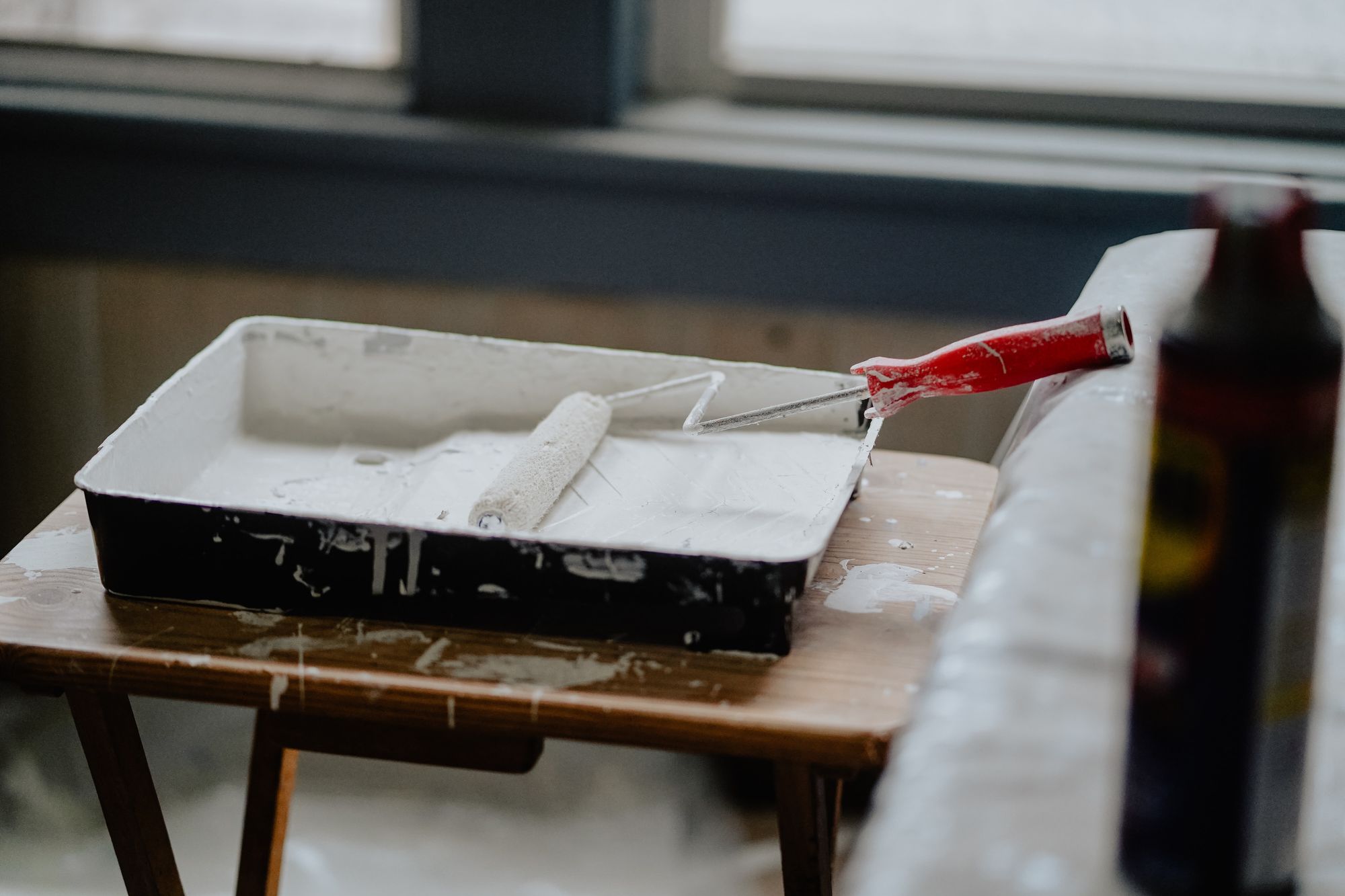
Andrew and I love a good DIY project.
We’ve renovated our kitchen, replaced flooring, painted cabinets, tackled bathroom projects, and built enough things ourselves that walking through Home Depot on a Saturday morning has started to feel suspiciously normal.
Part of it is the savings. If we can learn a skill and avoid paying someone else to do the work, we’re usually willing to try.
But there’s another question we’ve started asking before taking on a project:
Is this actually worth doing?
Because there’s a big difference between an upgrade that makes your home more enjoyable and one that makes sense financially. And there’s nothing quite like spending several weekends—and several thousand dollars—on something only to discover that a future buyer sees it as their first demolition project.
If you're thinking about putting some sweat equity into your home, these are the DIY projects I’d prioritize, the ones I’d think twice about, and a few lessons we’ve learned doing the work ourselves.
First, Decide Who You're Renovating For
When Andrew and I were house hunting, we toured plenty of homes that had clearly been renovated.
Some were beautiful.
They were also very obviously renovated for the people already living there.
We saw bold fireplaces, highly personalized bedrooms, awkward layouts, a garage with so much built-in storage you couldn't comfortably park a car in it, and even carpet extending into a bathroom.
More than once, we'd walk through a room and say some version of, “Well...that's interesting.”
There's nothing wrong with designing your home around your own personality. I absolutely have. I painted a colorful stencil pattern across our bathroom floor because I love it.
But I also know another homeowner may walk in someday and think, “Step one: cover that up.”
And that's okay.
The lesson for me wasn't that every home should be beige. It was that you should know whether you're spending money for yourself or for resale.
If we're making something because it will make our family happier for the next ten years, I'm much less concerned about whether every future buyer will love it.
If we're making an improvement primarily because we hope it'll help the home sell someday, I want it to be functional, relatively timeless and appealing to more than just us.
That one distinction can save you a lot of money.
Start Outside—Before You Start Expensive
Curb appeal sounds like one of those real estate phrases that requires a landscaper, a designer and approximately six figures.
It doesn't.
Living in Phoenix, where one stucco home can look remarkably similar to the stucco home beside it—and where an HOA may have opinions about everything from your paint color to your choice of shrub—sometimes the smallest details make the biggest difference.
Before I'd spend thousands changing the exterior of a house, I'd start with the boring stuff.
Pull the weeds. Trim the shrubs. Pressure-wash the driveway. Clean the light fixtures. Touch up chipped paint. Replace a tired doormat. Put something alive in a planter near the front door.
None of that makes for a dramatic HGTV reveal, but together it changes how a home feels before someone ever walks inside.
If you want to go one step further, the front door is one of my favorite places to spend a little money.
Paint it. Clean up the entry. Replace dated hardware. Make sure your exterior lighting actually lights something.
You don't need a hand-scraped mahogany door made by an Amish craftsman to create a good first impression.
And if you live somewhere with an HOA like we do, check the rules before falling in love with a paint color. Your bold new front door is considerably less exciting when followed by a violation letter.
The Kitchen Is Where I'd Spend More Time Than Money
Our kitchen was one of the first areas we wanted to update because cooking and hosting are important to me.
Luckily, I already liked the layout. If I hadn't, that's an entirely different level of renovation.
What I didn't love were the finishes.
And that's where I think kitchens can fool homeowners into spending far more than they need to.
You don't necessarily need to rip out the cabinets, move plumbing and order acres of quartz to make an older kitchen feel dramatically different.
Sometimes the best first moves are also the simplest: replace dated cabinet hardware, update the faucet, improve the lighting and give tired cabinets a fresh finish.
We painted our outdated oak cabinets ourselves.
Was it difficult?
Not particularly.
Was it fast?
Absolutely not.
Painting kitchen cabinets is the kind of DIY project that makes you question your life choices somewhere around cabinet door number 17.
But the transformation was worth it.
If your cabinets are in good condition, paint can completely change the room without replacing perfectly functional boxes. New hardware and soft-close hinges can make the finished project feel even more polished.
I'd also be careful about removing too much storage just because open shelving looks beautiful online.
I like open shelves.
I also like hiding the approximately 700 objects required to operate a family kitchen.
Before replacing upper cabinets with floating shelves, think about where your dishes, appliances, food containers and collection of coffee mugs are going to live.
And then there's my pantry.
Our pantry cabinets are so deep that something can enter the back of one and disappear until the next presidential administration.
I would love to eventually turn that area into a more functional walk-in pantry, but that project sits lower on our priority list because the kitchen works without it.
That's another DIY lesson we've learned: just because something annoys you doesn't mean it should automatically become your next expensive project.
Countertops: Know When a Temporary Fix Is Enough
Countertops are another place where renovation costs can escalate quickly.
If you're keeping a home long-term and have always dreamed about a certain material, spending more may make sense.
But replacing counters doesn't have to mean immediately jumping to expensive stone.
I've painted old laminate before. There are also affordable modern laminates, butcher block and DIY-friendly resurfacing options that can dramatically improve a dated kitchen without turning it into a major renovation.
The key is knowing what you're trying to accomplish.
If you're making a cosmetic update to get a few more years from otherwise functional countertops, a resurfacing project can be a smart compromise.
If the cabinets are being replaced, the layout is changing or you're creating the kitchen you intend to keep for the next 15 years, that's when I would think more seriously about investing in the permanent material you actually want.
What I wouldn't do is spend premium money simply because you assume every expensive upgrade comes back to you when you sell.
Sometimes it doesn't.
If You Only Have a Weekend, Do the Bathroom
Bathrooms may be my favorite example of how small DIY projects can completely change a room.
I recently repainted the cabinetry in our guest bathroom and was shocked by how much easier it was than painting the kitchen.
It took less than a day.
While I was working on it, I sanded the existing solid-surface vanity top and refinished it in a crisp white. That one-day project took a bathroom that felt dated and made it look noticeably cleaner and more modern.
Bathrooms also respond incredibly well to maintenance.
Old caulk, discolored grout, chipped paint and mismatched fixtures can make an otherwise perfectly functional bathroom feel far older than it is.
Fresh caulk isn't glamorous.
Neither is scrubbing grout.
But if you have a limited budget, I'd do those things before tearing out a usable shower simply because TikTok convinced you that you need floor-to-ceiling marble.
Once the room is clean and repaired, look at the pieces your eye naturally lands on: the vanity, mirror, faucet, showerhead, towel bars and lighting.
You'd be surprised how different a bathroom can feel when those elements actually look like they belong together.
This is also where I'd give yourself permission to have some personality.
My colorful bathroom floor isn't something I would necessarily recommend to someone renovating strictly for resale.
But we live here.
I like it.
And if the day comes when a more neutral floor makes sense, it can be changed.
Your house doesn't have to spend its entire existence preparing for a hypothetical future owner.
Flooring Was One of Our Bigger DIY Projects—and I'd Do It Again
Of all the projects we've tackled, replacing our flooring is one of the ones I'd absolutely do again.
We installed the same light-to-medium wood-look vinyl flooring through our bedrooms and main living spaces. It made the rooms feel more connected almost immediately.
It has also been wonderfully practical.
Hard surfaces are easy to clean, the flooring has held up well, and the color is forgiving enough that every speck of dust isn't visible from across the room.
That last part becomes surprisingly important after you actually live with a floor.
If you're replacing flooring with resale somewhere in the back of your mind, I would lean toward consistency rather than trying to make every room its own design moment.
A relatively timeless floor creates a backdrop.
Your furniture, rugs, paint and décor can provide the personality.
And before replacing anything, don't underestimate maintenance. Clean the existing floors thoroughly. Touch up your baseboards. Repair damaged transitions. Sometimes a room looks dated because the flooring is old.
Sometimes it just looks tired because everything around it needs a good scrub and a fresh coat of paint.
Knowing the difference can save you thousands.
Don't Ignore the Improvements You Can't Put on Pinterest
Not every worthwhile home project makes a good before-and-after photo.
Energy-efficient lighting, a smart thermostat, water-saving fixtures, insulation and updated electrical features aren't going to get the same reaction as a gorgeous kitchen backsplash.
They can still improve the way a home functions every single day.
This is where I'd think less about what sounds impressive in a listing and more about what solves an actual problem.
Is one part of your home always hotter or colder than the rest?
Is your electric bill painful?
Are your bathroom fixtures wasting water?
Does your kitchen have one outlet located approximately three counties away from where you actually need it?
Fix the problems that make the house harder or more expensive to live in.
Function has value, too.
The Projects I'd Think Twice About
The biggest mistake I think you can make is assuming that expensive automatically means valuable.
A luxury remodel may be absolutely worth it if it's something you've dreamed about and you plan to enjoy it for years.
That's different from doing it because you assume you'll get every dollar back when you sell.
I'd be especially cautious about permanently removing useful features to create something more specialized.
For example, converting your only garage into living space may give your family exactly the room it needs right now—but you've also removed a garage for every future buyer.
The same principle applies to ultra-specific built-ins, unusual layouts and very personalized permanent finishes.
That doesn't mean don't do them.
It means be honest about why you're doing them.
“We will love this” is a completely valid reason to renovate.
It just isn't the same answer as “This will increase our home's resale value.”
One Boring Money Habit That Future You May Appreciate
There is one thing I wish more homeowners thought about when the project begins instead of years later:
Keep the receipts.
And not just the receipt for the giant appliance you know you'll remember.
Keep records of substantial improvements you make to the property—materials, contractor invoices and documentation showing what was done.
Some qualifying capital improvements can become part of your home's adjusted cost basis when you eventually sell. Routine repairs and maintenance generally aren't treated the same way, so the distinction matters.
In other words, the folder full of renovation receipts that currently feels like clutter could become surprisingly useful later.
We spend so much time thinking about what a renovation costs today that it's easy to forget the financial life of a home can last decades.
So, What Should You Renovate First?
After enough projects, I've become much less interested in completely transforming a house and much more interested in making smart improvements.
If I were starting over, I wouldn't create a massive renovation list.
I'd walk through the house and ask three questions:
What isn't functioning well?
What looks worn rather than simply unfashionable?
What improvement would make the biggest difference to our everyday life for the money and time we're about to spend?
Then I'd pick one project.
Maybe it's $40 worth of caulk and paint.
Maybe it's a weekend spent updating a bathroom.
Maybe you've saved enough to finally replace the floors you hate walking across every morning.
Your house doesn't need to look like everyone else's to have value.
And you don't have to spend a fortune every time you want to make it better.
Trends will change. Today's must-have finish will eventually become tomorrow's “What were they thinking?”
But a clean, functional and well-maintained home tends to age a lot better.
So renovate the house you actually live in.
Spend intentionally.
DIY the projects that make sense.
And maybe save a few of those weekends for something other than Home Depot.